
Phoenicians or Punics?
A look at the problem of Phoenician and Punic identity.

The Phoenicians were an ancient people from what is now Lebanon, whose lands were called Phoenicia in their honour. Throughout their history, they founded multiple colonies in the western Mediterranean that are currently classified, in terms of identity, as Punic, the most emblematic case being Carthage. Talking about Phoenician and Punic identities is a complex subject. What I intend to address here, more than defining the main cultural aspects of each (which otherwise do not seem to be very different), is the problem of whether it is correct to speak of Phoenicians and Punics as distinct cultural entities. So, were the Punics, like the Carthaginians, also Phoenicians as the inhabitants of Tyre, Sidon or Aradus?
Puedes leer este artículo en español haciendo click aquí.
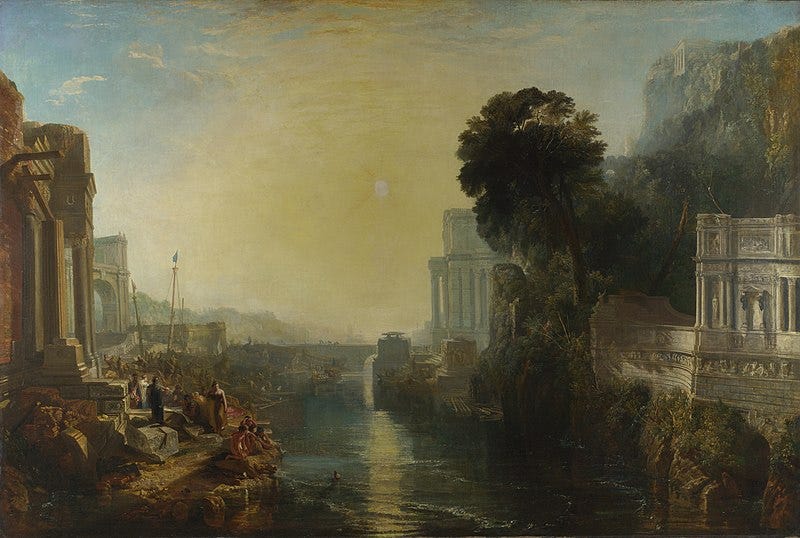
In his monumental work that constitutes a foundational moment for Phoenician historiography, The World of the Phoenicians of 1973, Sabatino Moscati states in its first pages that:
it is dificult to establish a time when actual Phoenician civilization ends and Punic civilization begins, and in many cases the proble is irrelevant, since the one is the continuation and development of the other (p. 18 ).
Moscati himself has said so. The problem is irrelevant insofar as Phoenicians and Punics are one and the same people to whom different terms are given according to time and geographical context. Still, for Moscati, it is clear that to speak of Phoenician culture is not necessarily the same as speaking of Punic culture, since the latter has as a distinctive feature the reception of local cultural elements from the places where the colonies were settled. This concept –colonies– is essential, as it allows a first distinction to be made between the cities of Phoenicia, distinguished as such (Phoenician), and their colonies, which are called Punic. Cities in the lands of origin, Phoenician; colonies in the west, Punic.
Perhaps this is the most tangible differentiation that can be made when comparing Phoenician cities and their western colonies, but there are many modern scholars who advocate using and deepening the distinction between both concepts from an identity perspective, implying that the terms Phoenician and Punic are not synonymous, or that it would be incorrect to label colonies such as Carthage, Utica or Gadir as Phoenician. Let's take a brief look.
For example, Bondì (Phoenicity, punicities, 2015) has a fairly clear idea of what the term Punic means, which would serve to name the Phoenician colonies established in the western Mediterranean, after the emergence of Carthage as a hegemonic city over the other colonies. Thus, the term Punic would be closely related to the Carthaginian culture and that of other Punic cities in Africa such as Utica, Susa and Lempta, which began to acquire their own cultural traits due to constant contact with the local population, and which they imposed through Carthaginian rule. Other historians and archaeologists such as Telmini, Docter, Bechtold and Chelbi (Defining Punic Carthage, 2015) are of a similar opinion, arguing that the distance of the colonies from their land of origin, and the constant contact with local cultures as varied as those of Sicily, Africa and southern Iberia, led to a gradual change that does not allow them to be classified as Phoenician, and therefore the use of the term Punic would be correct.
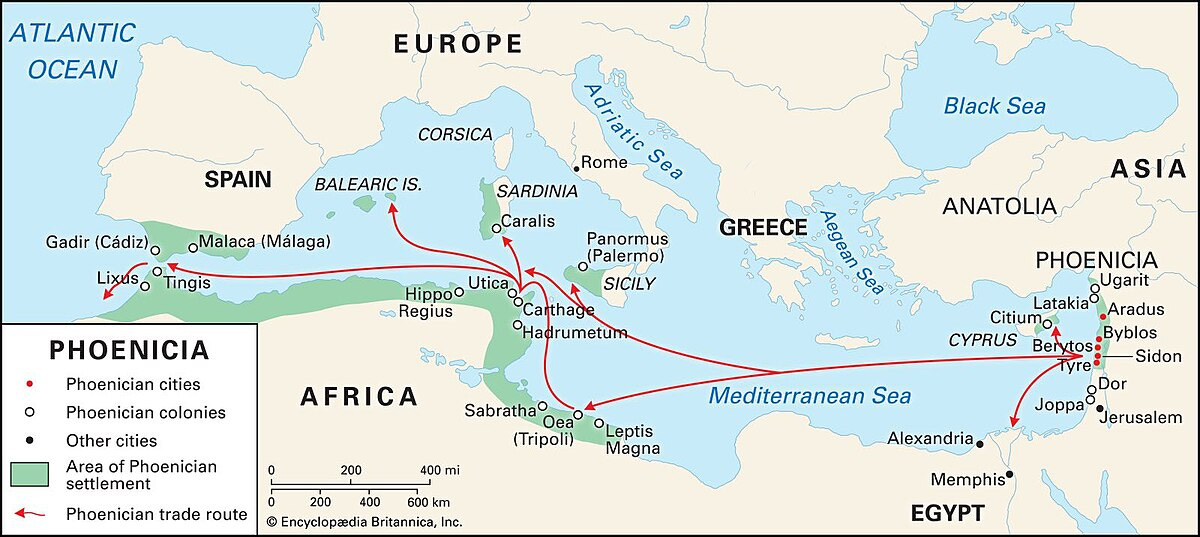
Personally, I agree with the opinion of scholars like Moscati or Prag, who argue that the distinction between Eastern Phoenicians and Western Punics is a modern one, since Punics and Phoenicians were one and the same people. Now, the term Phoenician –assuming it is the same as Punic– is itself problematic for modern historiography, because we have no record of the very peoples we categorise as Phoenicians referring to themselves in that way. In other words, the Phoenicians did not define themselves as Phoenicians, or we have no written or epigraphic records to prove it. From this perspective, the mere fact of speaking of Phoenicians would be highly problematic, anachronistic, or just incorrect, but there are certain indications that at least justify this notion that modern historiography shares with Greco-Roman literature, where the different cities of Phoenicia (Tyre, Sidon, Byblos and Aradus) were seen at least as a single cultural entity, which shared language, customs and religious beliefs. The term used by the Greeks to refer to this group of cities was φοῖνιξ, which was translated by the Romans as phoenix or poenus, synonyms meaning Phoenician.
The Greeks used the term φοῖνιξ without distinction to refer to the cities of Phoenicia and its colonies, so that Carthage, Gadir and Sidon could all be classified as φοῖνιξ. Initially, the Romans used the terms phoenix and poenus in the same way, so that both Tyre and Utica could be categorised as poenus or phoenix. The term punicus appears on the scene in the last period of the Roman Republic (1st century B.C.), long after the last of the Punic Wars and the destruction of Carthage, and consolidates a tradition that began with Varro, in whose extracts, which can be accessed indirectly through the work of Pliny the Elder (H.N. 3. 1. 8), appears the first distinctions between the terms phoenix and poenus. Thus, the term poenus would have given way to the term punicus, which was used exclusively to refer to the Phoenician colonies in the western Mediterranean. This is a characteristic unique to Roman literature, for in Greek literature there always remained a single word for the Phoenician cities and their western colonies.
Interestingly, the term punicus arises just at the time when Rome came into direct contact with Phoenicia, when the region of Syria was annexed to the Republic by Pompey (64 BC). Perhaps the direct contact the Romans had with the cities of Phoenicia led them to perceive cultural differences that warranted a word to distinguish them from the western Mediterranean colonies, with which the Romans were already quite familiar.
Now, going back to the beginning of this article, is it correct to speak of a Phoenician culture and a Punic culture? Again, we can turn to Moscati, who calls this an irrelevant problem, since it is not really a problem, but the doubt remains, so I will formulate it in another way: were the cities classified as Punic culturally so different from the Phoenician ones as to deserve such a distinction, or were they also Phoenician cities?
Let's start from the fact that the Punic language was a dialect of Phoenician, without major modifications. Likewise, the Phoenician religion, with its gods Baal Hamon, Baal Shamem, Reshef, Astarte and Melkart, was the religion of the western colonies. The cult of the god Melkart, the chief god of the city of Tyre, was also practised at the other end of the Mediterranean, at Gadir, where there was a temple consecrated in his honour. A Tyrian in Gadir would have had no trouble finding the temples of the same gods to which he made offerings in Tyre, nor would he have had much trouble communicating with the local population, since only a few words, idioms and accents would differ from his own language. The same would have been true of a trader from Gadir in Tyre. He would have had no need to resort to Greek to make himself understood, and he would have easily found a temple consecrated to Melkart where he could make offerings, just as in his own city.
Perhaps the comparison between Tyre and Carthage is the most revealing in terms of the cultural similarities shared by the two cities, and thus by the Phoenicians and Punics if anyone wants to maintain the distinction. In Tyre, the founder of Carthage, the main god was Melkart, and other gods such as Baal Hamon, Astarte and Reshef were also worshipped, which in turn were also worshipped by the Carthaginians. The only difference in this respect is to be found in the Carthaginian cultural openness, which allowed the incorporation of Egyptian and Greek gods, but the Phoenician gods from Tyre always constituted their main deities.
In the realm of politics, the institution of the sufetes established at Carthage –annual magistracies shared by two persons holding the highest powers in the city– was inherited from Phoenicia, where its use is attested by inscriptions at Tyre. The same is true when one looks at the names of the magistrates recorded in such inscriptions, such as Adonibaal, a common name in both Tyre and Carthage.
There is one episode in particular, recorded by the Roman historian Livy, which gives an account of the close cultural connection that still existed between Tyre and Carthage at the beginning of the second century BC, more than six hundred years after the foundation of the colony in Africa. In Livy's words (33. 49. 5), after being exiled from Carthage to avoid being caught by the Romans in 196 BC, Hannibal
arrived in Tyre, where the founders of Carthage welcomed, as a second homeland, the man who had distinguished himself with every possible honour.
Hannibal's choice of exile was not accidental. The cities of Phoenicia were under Seleucid rule, the only empire of the time capable of putting up some resistance to Rome, and the choice of Tyre in particular makes the most sense in terms of familiarity with the city and customs. It must not have been difficult for Hannibal, a man who spent most of his time outside Carthage, to feel as if he were in a second homeland, as the inhabitants of Tyre intended, a city with which he shared a common language, a belief in the same gods, and a common past.
The issue of Phoenician identity is undoubtedly one that is still developing, awaiting what new archaeological excavations may uncover. I do not intend to give a definitive answer to the issue, but I do want to highlight the similarities between Phoenician cities and their colonies, and to show how complex it can be to classify the Punic as distinct from the Phoenician. The issue of the cultural alterations suffered by the colonies due to the distant locations in which they were founded does account for regional particularities, but they are not enough to allow them to be separated from the main body of Phoenician culture. In this sense, it seems to me that the best approach is to understand the term Punic as a synonym of Phoenician, with the condition of geographical limitation. Thus, the application of the Punic concept would be limited to the Phoenician colonies in the western Mediterranean, a concept that allows us to recognise the cultural variations they underwent over the years due to contact with local cultures, but which in no way implies a separation from Phoenician culture.
All Punics were Phoenicians, but not all Phoenicians were Punic. They both shared a common language, beliefs and origin, and although there is no evidence from Phoenician or Punic cities to show a self-perception such as the one we are defining, archaeological remains and literary sources do show us these common elements that allowed the ancient Greeks and Romans to identify them under the same cultural identity.
If you are not a subscriber and you are interested in my content, I invite you to do so - you will support my work and motivate me to keep writing!
This makes me think of the use of modern terms like Latino, where there are specific academic definitions that one can apply, but most people are not specific about which exact ethnicity they're speaking of most of the time, and indeed they sometimes misuse references and don't correct themselves. I imagine the Greek phoinix being used this way by Mediterranean speakers of Greek and Latin.
Another question I would have is, was the society so multicultural that being precise is a misunderstanding of the reality? If you're in Sicily where you might find native Sicels and Sicans, Greeks, Carthaginian and Phoenician visitors or transplants, and later on Romans, what should you say is the majority culture? Even if you take a snapshot at one moment in time it was always changing due to the current military and economic situation.
Your hypothetical merchant of Phoenician extraction might not need to express himself in Greek to conduct business, but he'd have an economic incentive to speak multiple languages as well as he could and to adopt local culture whenever it offered an advantage. He might also have friends across these cultural lines and be respectful when on their turf.
Very interesting!