
Escaping from Rome
A biography of the life in exile of Hannibal, the great Carthaginian general.

Hannibal is one of the most famous generals in history, a fame he acquired largely due to his overwhelming victories on the battlefield against the Romans, the eternal rival. Trebia, Trasimeno, Cannae or Herdonia, are all battles whose epic records have survived the passage of time, immortalizing the exploits of the great Carthaginian general. So impressive were his military achievements, that they ended up displacing the interest in the life of the general after his tireless fight against Rome. In his exile, his traces begin to disintegrate, but something can be rescued to build the last stage of Hannibal's life.
Puedes leer este artículo en español haciendo click aquí.
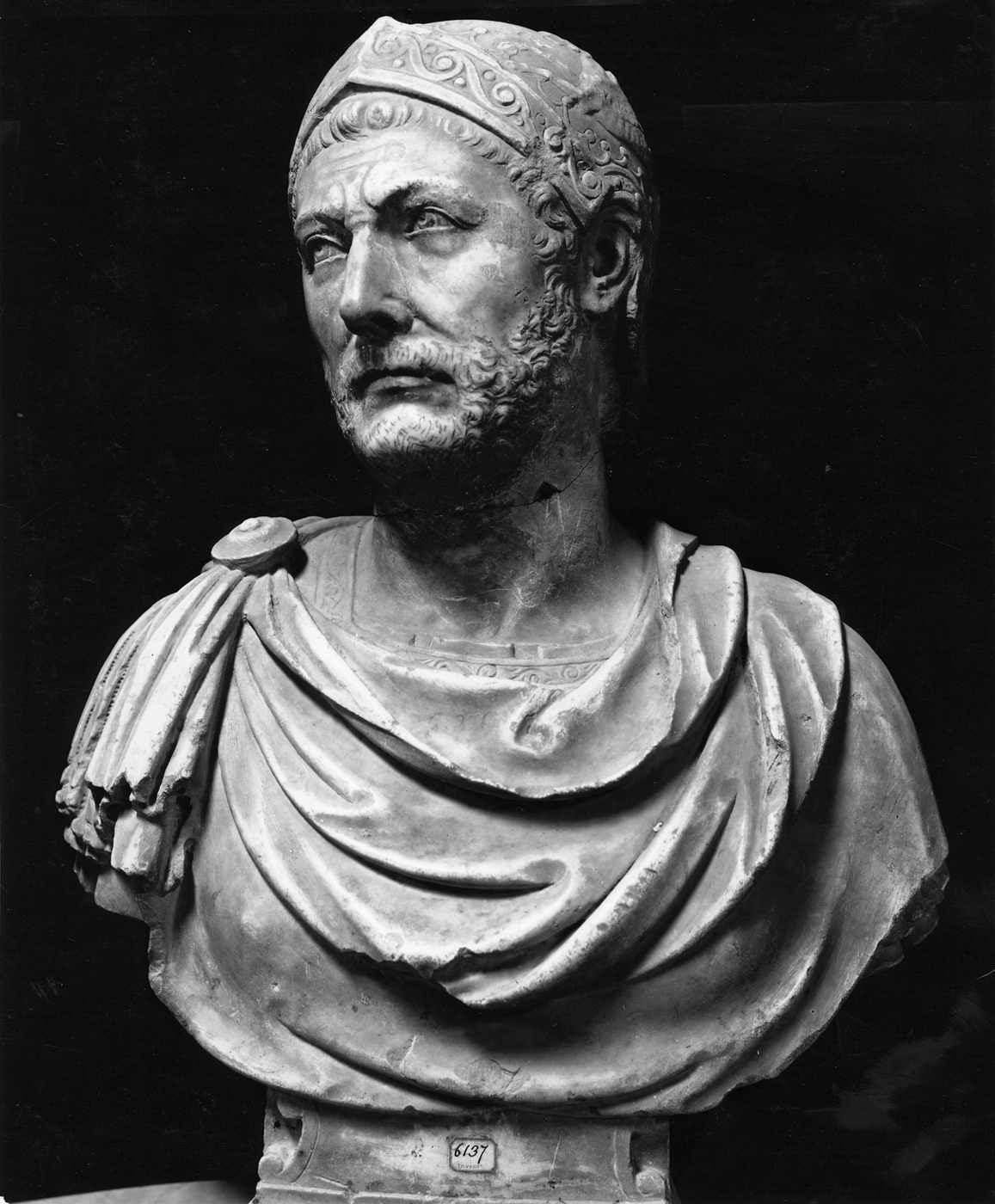
In general, when talking about Hannibal (247-183 BC) the focus is usually on his invasion of Italy and the war against Rome (Second Punic War). Everything else is overshadowed by this epic period of his life. His crossing of the Alps in winter with an army that included elephants and his crushing victories over the Romans during his fifteen years in Italy cemented his legacy. The Roman Cornelius Nepos, who wrote a biography of Hannibal, presents him as the greatest general of all time (Hann. 1. 1). With that background, it is easy to understand that historiographical interest in Hannibal's life has always focused on his war against Rome, something that is replicated to this day.
But Hannibal went on to live a life full of challenges, epic victories and defeats, after the war against Rome, and it is on that period of his life that I want to focus in this article. Initially I envisioned it as a complete biography of his life, but precisely because there are already great works that narrate the life of this legendary general of Antiquity, there is little new that can be said about his years of life during his struggle against Rome. Instead, it seems to me that the period of Hannibal's life beginning with the defeat of Carthage by Rome and his subsequent exile still reflects the nature and impact that Hannibal had not only on Carthage and Rome, but on the entire Mediterranean and in particular on the Hellenized world.
So what became of Hannibal after his war with Rome? Perhaps the best way to answer that is to start with Zama, the last battle of the Second Punic War and Hannibal's first defeat in a pitched battle. Hannibal managed to escape the disaster that meant that defeat for him and for Carthage, with a few loyal men, with whom he rode in the direction of Hadrumentum, a city that was south of Carthage. From there, waiting for the right moment not to be intercepted by Roman troops, he traveled to Carthage, where he appeared before the senate and urged the senators to surrender to Rome and accept peace terms (Polyb. 15. 19. 1-3).
By 202 BC Carthage and Rome had put their differences behind with the imposition of a humiliating and restrictive peace treaty on the Carthaginians. The treaty included the prohibition of making war with any other people without the approval of the Roman senate, the destruction of their war fleet except for ten ships, the limitation of their territory to Africa (present-day Tunisia), and the payment of an indemnity within fifty years, among other minor conditions (for the treaty in detail see Livy, 30. 37. 1-6). In that scenario, Hannibal was returning to live in Carthage after thirty-five years, without being for the first time in his adult life, the general in charge of an army or a war to fight. Now, Hannibal was a simple civilian in Carthage, a Carthaginian, although no one in the city, not even his fiercest rivals, could have denied that he was the most famous Carthaginian of his time, and perhaps of the entire history of his city.
Not much is known of Hannibal's life during the following years, until 196 BC when he was elected suffet, the highest civilian office in the administration of the Carthaginian state. Aurelius Victor asserts that during the years prior to being elected, Hannibal used his war veterans in public infrastructure work in and around Carthage and in planting olive trees (De Caes. 37. 2-3), perhaps precisely as a way of seeking popular support in future elections while keeping his soldiers busy. In any case, in 196 BC Hannibal was elected as suffet and became head of the Carthaginian state.
The best source for this period of Hannibal's time is undoubtedly Livy. He recounts that as suffet, Hannibal implemented a series of reforms to the political system that sought to solve the problems of concentration of power by the aristocracy, and the corruption that existed among their ranks due to the impunity granted to them by the system. In particular, these reforms would have been aimed at eliminating lifetime positions in the judicial system and opening it to annual democratic elections. Strong control of the state coffers would also have been part of his program (33. 46-47), helping to revitalize the economy of Carthage, hard hit by the war indemnity it had to pay to Rome.
By 195 BC, the year in which Hannibal's term ended, the opposition to him by the aristocratic groups that had seen their power undermined by the reforms implemented decided that it was time to get rid of Hannibal once and for all. Here underlies a very cynical thinking in the Carthaginian way of doing politics, dominated by factions or family clans highly competitive among themselves for power quotas. The Barcid clan always had a strong opposition in the Carthaginian senate, and from the moment that defeat by Rome was a real prospect, many Carthaginian senators disassociated themselves from the Barcids to accuse them as the main instigators of the war against the Romans, exempting themselves from any degree of responsibility. In the same vein, Hannibal's opponents were always ready to hand him over to Rome as long as they did not suffer the reprisals of defeat. When they saw that Hannibal, now as a politician, was beginning to undermine their own sources of power, they reactivated that old logic of disassociating themselves from him before the Romans, and turned to them to capture and send him to Rome as a prisoner on charges of initiating contacts in his period as suffet with Antiochus III, king of the Seleucid Empire, to coordinate efforts in a new war with Rome.
The Romans, always very attentive to everything Hannibal did, agreed to the requests of the Carthaginian senators and sent a retinue to Carthage with orders to arrest him and take him to Rome. But once again, Hannibal was ahead of the Romans and when they arrived at the port of Carthage, he had already left the city heading south to the city of Hadrumentum, where his family had land and therefore it was easier for him to surround himself with people loyal to him. In any case, Hannibal felt that Africa was no longer safe as long as the Romans were after him and boarded a ship that took him to the island of Kerkina (off the eastern coast of present-day Tunisia). There, he boarded another Phoenician merchant ship that took him to Tyre, the founding or “mother” city of Carthage, where he was received by the population with public honors, as if he were a citizen of Tyre (Livy. 33. 49. 5).
Hannibal's choice of Tyre as the first place to seek refuge may have been due to at least two factors. The first and most obvious is the connection that the city of Carthage had with Tyre, having been founded by Tyrian colonists in the 9th century BC. Carthaginians and Tyrians had a common origin and spoke Phoenician (with the Carthaginians speaking a Phoenician dialect known as Punic). In this case, the historical and cultural connections between the two cities are obvious, so Hannibal, thanks to his reputation in the Mediterranean, could be assured of a warm welcome among Tyrians eager to see and claim as their own the most famous general of the age. Another reason for his choice lies in the fact that Tyre was by then part of the Seleucid Empire, the only political entity of the time capable of standing up to the constant expansionism of Rome.
The Seleucid king, Antiochus III, welcomed Hannibal to his court probably that same year or at the latest 194 BC in the city of Ephesus, precisely because he was on the verge of a war with Rome for the domination of Greece, and considered that his knowledge could be useful.
Livy tells a very interesting story, in which while in Ephesus, Hannibal met Scipio Africanus (the general who defeated him at Zama) in the city's baths, and together shared a bath in which they had a curious conversation. Scipio asked Hannibal whom he considered the greatest general in history. His answer was Alexander the Great. Scipio then asked him who he put second, to which Hannibal named King Pyrrhus. When Scipio asked him whom he was naming third, Hannibal surprised him by answering himself. Intrigued by the answer, Scipio asked him what he would have said if he had been the victor at Zama, to which Hannibal replied that he would have put himself ahead of all the generals, which Scipio took as a compliment.
Rarely have two of the greatest generals in history, who were also enemies already facing each other on the battlefield, had such an opportunity to have a relaxed conversation and share their military opinions. It was precisely as a result of this meeting that Hannibal had with the Roman envoys, who had arrived in the city to discuss diplomatic matters with Antiochus, that the king was encouraged by those closest to him to suspect the Carthaginian general. This brings us to another of the most memorable episodes of Hannibal's life: when he related to Antiochus the occasion when, as a child, his father made him swear before the altar of Baal Hamon (one of the principal deities of Carthage), that he would always be an enemy of the Romans. The epic that has survived here is the story of Hannibal, the image of him as a child making the solemn promise to his father.
The particularity of this episode of the oath is that it was narrated by Hannibal himself, but in a late period of his life, and in an unfavorable situation in which the court of Antiochus was suspicious of him for his relaxed meeting with the Romans in the baths of Ephesus, something they saw with concern in view of the impending war with Rome (Liv. 35. 19. 2-5). This account of the oath may well have been just an invention of Hannibal to try to dispel the suspicions that had fallen on him. In any case, whatever he had said about Rome, he could have backed it up with the facts. To those who heard him that day, his words sounded logical and they took them for true, perpetuating one of the main elements of his legend: the eternal hatred of Rome, and I say legend, because if we go to the facts when reviewing Hannibal's life, we will find that there are many who do not match with the idea of an eternal enemy of Rome. The very meeting between Hannibal and Scipio in the baths of Ephesus is one of many proofs that the Carthaginian general did not feel a particular hatred for Rome, but that is a topic for a separate essay (scheduled for the future).
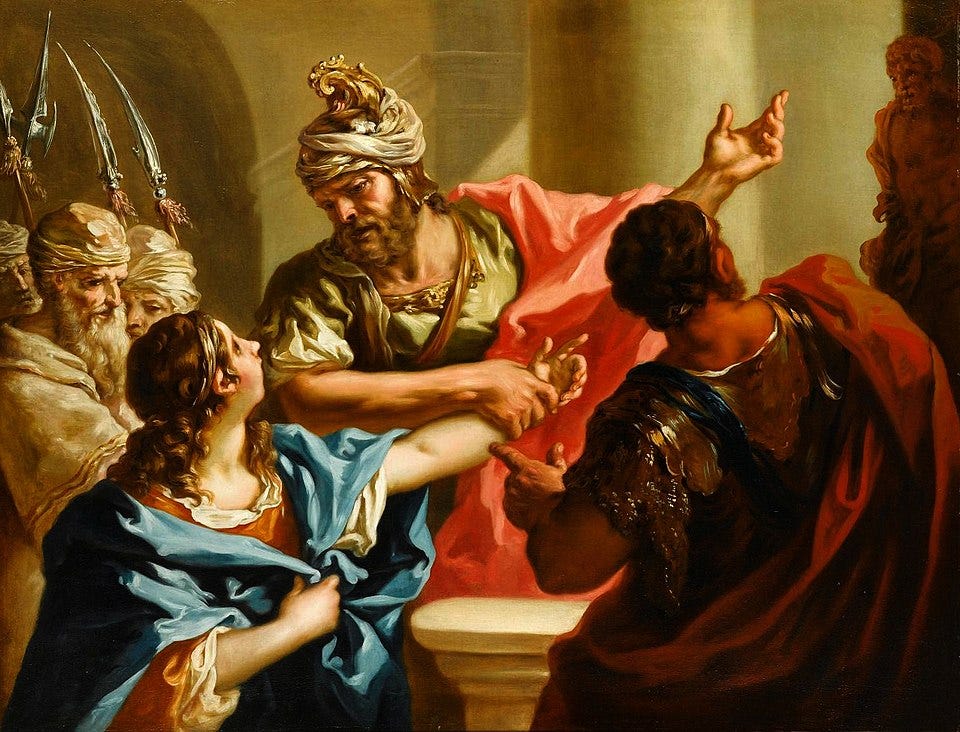
After this encounter with Antiochus, Hannibal seems to have consolidated his position as military advisor at the Seleucid court, and in view of the incipient war with Rome, Hannibal was charged with trying to establish an alliance with Carthage. For this, Hannibal trained a man from Ephesus named Ariston, whom he sent to Carthage to try to contact and unify former supporters of his family, the Barcids, to regain control of the Carthaginian senate. That would have allowed Hannibal to return to his city and forge a military alliance between Carthage and Antiochus on the eve of his war against Rome. But Ariston was discovered and expelled from the city by the Carthaginian senate, ending any chance of a reunion between Hannibal and his city. The anti-Barcid opposition was still too strong.
The war between Romans and Seleucids broke out in 192 BC. Hannibal played an increasingly secondary role in the king's court as his advisor, but in 190 BC he was entrusted with a fleet with the mission to meet the Rhodian fleet, allied with Rome, in the battle of Eurymedon (southern coast of present-day Turkey). The Carthaginian general, unaccustomed to the role of an admiral, suffered a defeat that forced his fleet to retreat, leaving some ships captured by the enemy.
That same year, Antiochus sent Hannibal to Phoenicia to supervise the construction of a new fleet. He called him back to his court in the summer of 189 BC, when the Romans, in their advance through Asia Minor, threatened to reach the heart of the Seleucid Empire. The fate of the Romans and Seleucids was sealed at the battle of Magnesia, with a crushing victory for Rome. The advice given by Hannibal was disregarded by the king and his other advisors, so it had no impact on the course of the battle. On the contrary, the outcome of the battle did have an impact on him, since among the clauses of the peace treaty imposed on Antiochus was the surrender of Hannibal to Roman authorities. Undoubtedly the fear of Hannibal was still very much alive in Rome.
Of course, Hannibal did not allow himself to be surrendered and preferred to escape from the Seleucid dominions and seek refuge in places farther away from Roman influence. Cornelius Nepos (Hann. 9-10) reports that Hannibal and his followers took a ship to Crete, where he spent some time in the city of Gortina. From there he sailed to Asia Minor, and then to the kingdom of Bithynia (north of present-day Turkey), where he was welcomed at the court of King Prusias.
Plutarch records that after leaving the court of Antiochus III, Hannibal sought refuge in Armenia, where he was welcomed by King Artaxias I. During his stay with the king, Hannibal would have supervised the construction of the new capital of his kingdom, Artaxata (Lucullus. 31. 3-4). This version does not coincide with Nepote's, and scholars generally tend to choose Nepote's version to reconstruct the last years of the Carthaginian general's life (for which I am also inclined). Anyway, in both versions Hannibal ends up being taken in by King Prusias, where he would spend his last years and live his last glories as a general.
King Prusias of Bithynia had been at war with the Hellenistic kingdom of Pergamum since 188 BC. Hannibal probably arrived in Bithynia at the end of that year, or during the following year, and quickly gained the trust of Prusias, who put him in charge of his kingdom's fleet. In 184 BC, the fleet of the Bithynians, commanded by Hannibal, engaged the fleet of King Eumenes II of Pergamum in the Sea of Marmara. Cornelius Nepos tells that the Pergamum fleet outnumbered the Bithynian fleet in ships, and to counter this, Hannibal ordered his men to install catapults on the decks of their ships and to trap snakes, which were abundant in the region, in amphorae. The battle plan was simple, Hannibal would be responsible for pinpointing the ship of King Eumenes II, which the Bithynians were to attack with all their forces while merely containing any enemy movement (Hann. 10).
When the two fleets met, Hannibal sent a messenger in a skiff with a letter for the king Eumenes. As everyone thought he was coming to discuss a possible peace agreement, since he was waving in his fist a letter he carried written by Hannibal, they allowed him to go forward and brought him alongside the king's ship. Then the messenger hastily withdrew. Eumenes opened the letter to find written taunts to him, and as he wondered why Hannibal had done that, the Bithynian fleet came upon him. Eumenes' flagship, pointed out by the messenger, was sunk. The king managed to escape while his fleet was attacked with catapult shots. The projectiles were amphorae that burst on the enemy decks and sailors, scattering the snakes everywhere. Faced with this threat, the sailors of Pergamum could do little in the face of the Bithynian onslaught. Many abandoned their ships to shake off the threat of the snakes, others were sunk. That was Hannibal's last victory as general. A last and small masterpiece that leaves us dyes of his genius.
This victory was also a disgrace for Hannibal, as Eumenes, an ally of Rome, alerted the senate of his defeat and who had been the cause of it. For the Romans, who felt a particular fear for the Carthaginian general as a result of his invasion of Italy, to see that Hannibal was still active and capable as demonstrated by his most recent victory over Eumenes, was intolerable. Cornelius Nepos tells that in 183 BC a roman embassy was sent to Bithynia in order to capture Hannibal. King Prusias refused to hand Hannibal over personally, but told the Romans where he was residing. When the Romans arrived at the villa where the now legendary Carthaginian general lived, a boy noticed the presence of Roman soldiers and ran to warn him. When Hannibal was certain that there was no way to escape, he took a poison that he always carried with him and died (Hann. 12-13).
That was the end of Hannibal, the great Carthaginian general, and in my opinion, the greatest general of all time. The existence of a tomb of Hannibal shows that the Romans respected his body, either in the form of allowing his men to present him the funerary rites, or doing it themselves (as Hannibal himself did with many of the Roman generals he defeated), but the first option seems more plausible. What is certain is that Hannibal's tomb was a well-known site during Antiquity, was located near the village of Libyssa and survived for several centuries, even undergoing a restoration in the reign of Emperor Severus (293 - 211 AD). Aurelius Victor confirms the existence of the tomb more than one hundred and thirty years after the restoration of Severus, on which the inscription could still be read (De vir. ill. 43):
Hannibal hic situs est – In this place is Hannibal
Just as the Romans hated and feared Hannibal, they also admired him, and with his death and the passage of time it was admiration that began to prevail in the view held of the Carthaginian general. Cicero, reflecting on the life of Hannibal, seems to be surprised that despite all his achievements he ended up being despised by his own people, and then admired by the Romans themselves (Pro Sestio, 68. 142). The existence of that tomb is proof of the respect and admiration that was felt in the Roman world for the figure of the Carthaginian general, the greatest enemy of Rome.
If you are not a subscriber and you are interested in my content, I invite you to do so - you will support my work and motivate me to keep writing!
A few years ago while I was in Türkiye I visited what is purportedly Hannibal’s tomb, which is located inside the grounds of a Turkish army base.
I’m not sure if Hannibal is actually buried there, but I think he would have liked to have been, as it is a very beautiful place indeed.